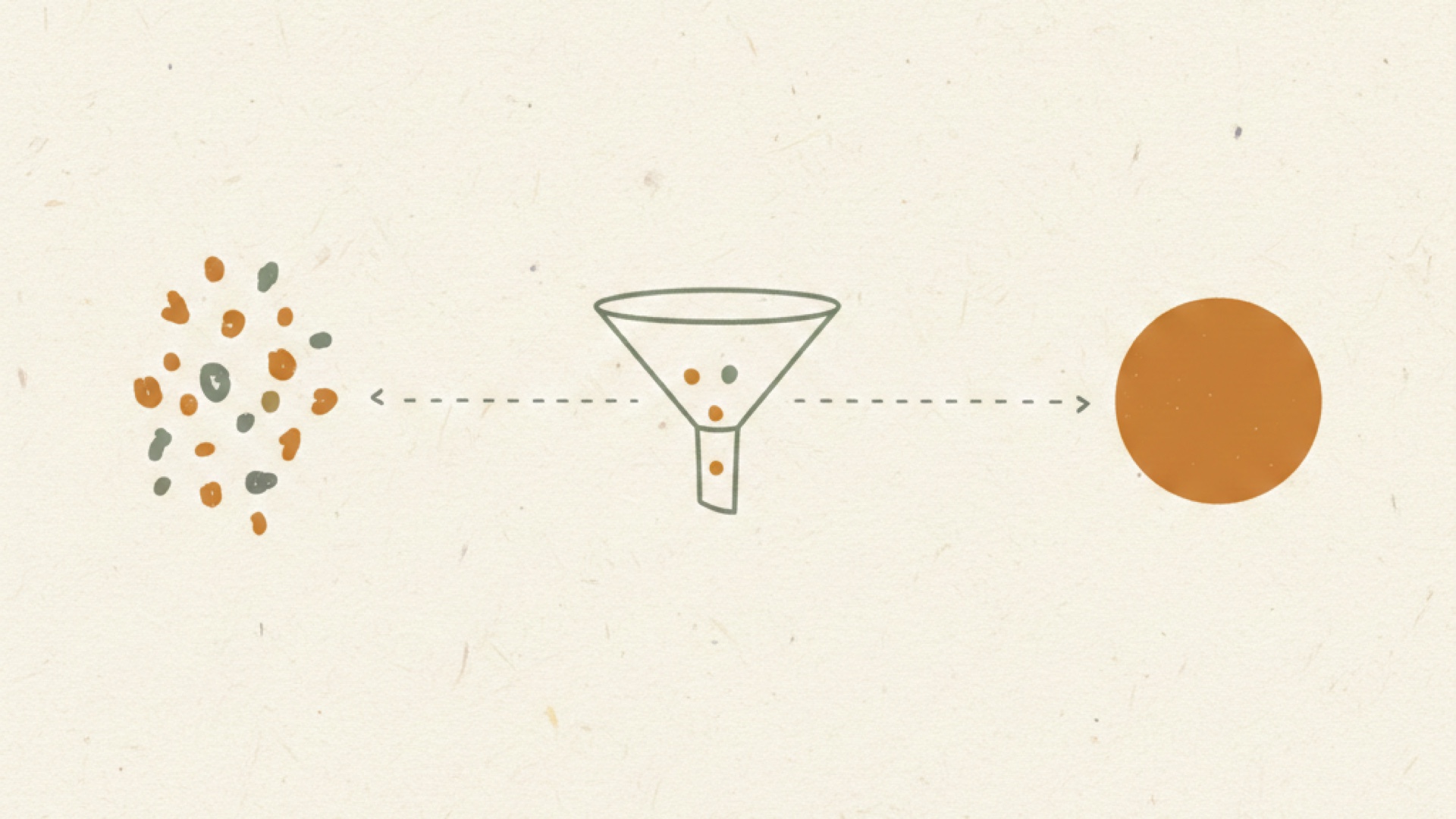
One of the most overlooked reasons innovation programs struggle to evaluate ideas effectively is that ideas come in without consistent structure. One person writes two paragraphs. Another writes two sentences. One describes the solution in detail but never explains the problem. Another explains the problem beautifully but offers nothing specific as a solution.
Before you can evaluate ideas well, they need to be captured in a consistent format. This is that format.
Why a Submission Template Matters
A submission template does three things. First, it makes evaluation dramatically faster because every submission answers the same questions in the same order. Second, it improves the quality of submissions because people think more clearly when they have to answer specific questions rather than write into an empty box. Third, it creates a shared language for idea review, so two evaluators working independently are assessing the same things.
The template below is designed to be short enough that people will actually fill it in, and specific enough that submissions will actually be useful.
The Idea Submission Template
Title
Give your idea a short, clear name. Not a slogan. Just a description in five words or fewer.
Example: Automated pre-shift safety checklist
What is the idea?
Describe the idea in 2 to 4 sentences. What would change, and how? Assume the reader is smart but does not know the details of your daily work.
Example: Replace the current paper-based pre-shift safety checklist with a simple mobile form that operators fill in on a shared tablet before each shift. The completed form would automatically notify the shift supervisor and create a log for monthly audits, replacing the current manual collection and binder system.
What problem are we solving?
What is broken, slow, risky, or frustrating about the current situation? What is specifically happening today that should not be, or not happening that should be?
Example: The current paper checklist is frequently incomplete, lost, or illegible. Supervisors spend 20 to 30 minutes per week tracking down missing forms. Audit preparation requires manual compilation of 3 months of paper records.
Who does this solve it for?
Who benefits if this idea is implemented? Be specific. Shift supervisors? End customers? A particular team or production line?
Example: Shift supervisors who currently chase missing paperwork. Safety auditors who currently compile records manually. New operators who struggle to remember which items the paper checklist covers.
How far could this scale?
Small: This can be tested in one area or team without significant investment.
Medium: This can be rolled out to a department or facility after an initial test.
Large: This can be applied across multiple facilities or fundamentally change how we work.
Choose one option and add a sentence explaining why.
Example: Medium. We can pilot on one shift on Line 4 within two weeks, with an existing shared tablet. If it works, it can be rolled out to all lines within a quarter.
Resources needed (rough estimate)
What would it take to test or implement this? Think in terms of time, money, or people. You do not need a business case. A rough sense of scale is enough.
Example: One day to build the form in our current survey tool. A shared tablet is already available on Line 4. No new budget required for the pilot.
Who else should weigh in?
Is there someone whose expertise or approval matters for this idea? Name them or their role.
Example: The site safety officer, and the shift supervisor on Line 4 who currently owns the paper checklist process.
How to Introduce This Template to Contributors
Do not just drop the template into your campaign without context. Add a short note at the top of the submission form explaining why each section exists.
Something like: We ask about the problem separately from the solution because the best ideas often come from reframing the problem. You may answer the problem field and realise your idea needs to adjust. That is useful. Spend two minutes filling in each section honestly, even if your answers are rough.
What Looks Good vs What to Watch For
A strong submission answers every field with specific details, not generalities. The problem section mentions a real situation, not a vague feeling. The "who" section names a specific group, not "everyone" or "the whole company."
A weak submission has a strong solution and a vague problem, or mentions benefits without any description of what currently does not work. When you see this pattern, it usually means the person has not thought through the problem clearly yet. The template does not prevent this, but it makes it visible during review.
Related Guides
- How to Write an Idea Challenge That Actually Gets Relevant Ideas
- How to Triage 100+ Ideas in 2 Hours
- The Idea Scoring Scorecard: 3 Models for Different Situations
→ See our full comparison of the 10 best idea management tools

.jpeg)